

Labor Costs and Regional Wage Differences
Labor is the primary driver of moving costs across the Mid-Atlantic region. The cost of living in Washington DC is significantly higher than in Baltimore, which directly impacts mover wages. In DC, professional movers often charge higher hourly rates to reflect the local economic environment. This means a comparable move in DC may cost 15% to 20% more than in Baltimore. Elite Moving & Hauling operates with competitive rates in Baltimore, reflecting the local labor market while maintaining high service standards.
Understanding labor cost structures helps you evaluate quotes effectively. If a quote from a DC-based company for a Baltimore move seems high, it may be due to their home base rates. Local providers like Elite Moving & Hauling often offer more competitive pricing for intra-city moves because they do not factor in long-distance travel premiums for their crew.
Traffic Density and Time-Based Pricing
Traffic conditions significantly impact moving costs because most movers charge by the hour. Washington DC is known for its heavy traffic congestion, especially during peak hours. This can extend the duration of a move, increasing the total cost. A move that takes four hours in a less congested area might take six hours in DC due to traffic delays. This time extension directly translates to higher bills for the customer.
When comparing cities, consider the time of day and day of the week. Weekend moves in DC can be particularly expensive due to high demand and traffic. In Baltimore, weekday moves are often more affordable and less stressful. Planning your move around off-peak hours can save money in all three cities, but the savings are most pronounced in DC.
Demand and Supply Dynamics
Seasonal demand affects moving rates in all three cities, but the magnitude varies. Summer is the peak moving season, with rates increasing by 10% to 20% in all locations. In DC, the demand for moving services is consistently high due to the government sector and corporate relocations. This sustained demand keeps prices elevated year-round. Baltimore sees seasonal spikes but generally has lower baseline demand than DC.
Philadelphia’s demand is driven by a mix of residential and commercial relocations. The city’s growing tech and healthcare sectors contribute to steady demand. However, the supply of moving companies in Philadelphia is robust, which helps keep prices competitive. In Baltimore, the supply of local movers is sufficient to meet demand, resulting in stable pricing. Elite Moving & Hauling maintains a reliable schedule in Baltimore, ensuring availability even during peak seasons.
Booking in advance is crucial in all three cities, but especially in DC. Last-minute moves in DC can cost significantly more due to scarcity. In Baltimore, last-minute moves are possible but may still incur premium rates. Planning ahead allows you to lock in standard rates and secure your preferred date. This is particularly important for large moves or long-distance relocations.
Distance and Long-Distance Considerations
For long-distance moves, the starting city matters less than the total mileage and weight of your belongings. However, the cost per mile can vary by region. Moving from Baltimore to DC is a short distance, typically under 40 miles. This short distance means that local moving rates apply, with minimal additional cost for travel. Moving from Baltimore to Philadelphia is approximately 100 miles, which may qualify for long-distance pricing.
Long-distance moves are usually priced based on weight and distance, rather than time. This means that the regional labor cost differences have less impact on the final price. However, the cost of fuel and tolls can vary. The route from Baltimore to DC involves fewer tolls than the route to Philadelphia. Elite Moving & Hauling provides clear pricing for both local and long-distance moves, helping you understand the total cost upfront.
When comparing long-distance moves, focus on the weight of your items and the total distance. The starting city’s labor costs are less relevant in this scenario. However, the destination city’s requirements, such as parking restrictions or elevator access, can affect the final price. These factors are similar across all three cities, but the specific regulations may vary.
Budgeting Tips for Regional Moves
To budget effectively, obtain quotes from multiple providers in each city. Compare the hourly rates, minimum charges, and additional fees. Look for transparency in the quote, ensuring that all potential costs are included. Elite Moving & Hauling offers upfront pricing with no hidden fees, making it easier to compare against other providers. This transparency helps you make an informed decision without surprises.
Consider the value of insurance and protection services. While not always included in the base rate, these services can be crucial for protecting your belongings. Compare the coverage options and costs across providers. In DC, insurance costs may be higher due to the value of items typically moved. In Baltimore, standard coverage is often sufficient for most households. Ensure that you understand what is covered and what is not before signing a contract.
Finally, factor in additional services such as packing, unpacking, and storage. These services can add to the total cost but may be worth the investment for a stress-free move. Compare the availability and cost of these services in each city. Elite Moving & Hauling offers a range of services to meet your specific needs, ensuring a comprehensive moving experience.
Key Takeaways
- Baltimore moving costs are generally 15% to 20% lower than Washington DC due to labor and traffic differences.
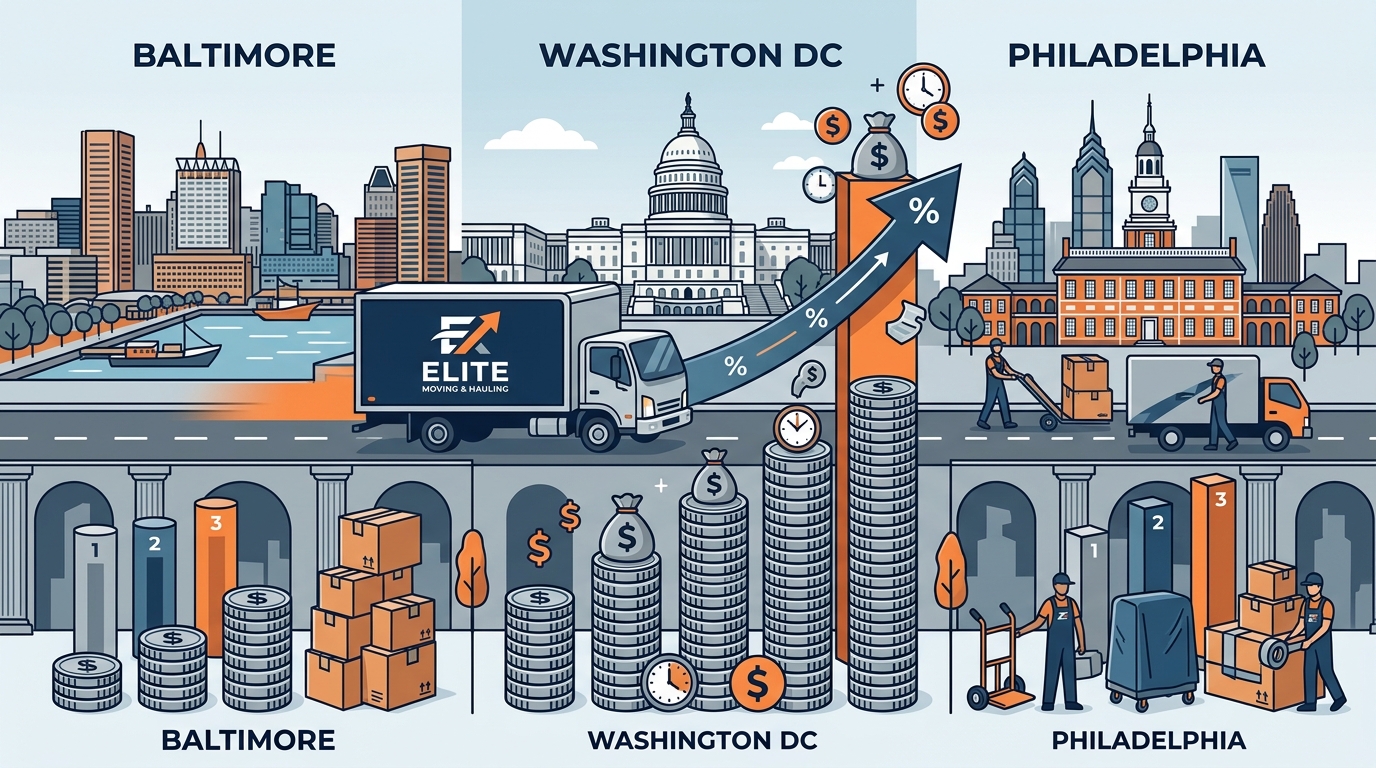
- Philadelphia rates fall between Baltimore and DC, offering a middle ground for budgeting.
- Traffic congestion in DC can extend move times, increasing hourly-based costs.
- Seasonal demand affects all three cities, with summer rates rising by 10% to 20%.
- Long-distance moves are priced by weight and distance, minimizing regional labor cost impacts.
- Elite Moving & Hauling provides transparent, upfront pricing for Baltimore moves.
- Booking in advance is crucial in DC to avoid last-minute premium rates.
Frequently Asked Questions
Is moving in Baltimore cheaper than in Washington DC?
Yes, moving in Baltimore is typically 15% to 20% cheaper than in Washington DC. This difference is primarily due to lower labor costs and less severe traffic congestion in Baltimore.
How much does a local move cost in Philadelphia?
Does traffic affect moving costs in Baltimore?
Yes, traffic can affect moving costs in Baltimore, but the impact is less severe than in Washington DC. Movers charge by the hour, so longer travel times due to traffic can increase the total cost.
Are long-distance moves from Baltimore to DC expensive?
Long-distance moves from Baltimore to DC are relatively short, typically under 40 miles. These moves are usually priced as local moves, with minimal additional cost for travel.
How can I save money on a move in Baltimore?
To save money, book in advance, choose off-peak times, and obtain quotes from multiple providers. Elite Moving & Hauling offers competitive rates and transparent pricing, helping you budget effectively.
Does Elite Moving & Hauling offer long-distance moves?
Yes, Elite Moving & Hauling offers both local and long-distance moving services. They provide clear pricing for all types of moves, ensuring you understand the total cost upfront.
Conclusion
Understanding the cost differences between Baltimore, Washington DC, and Philadelphia is essential for effective budgeting. Baltimore offers the most competitive rates, while DC is the most expensive due to labor and traffic factors. Philadelphia falls in between, providing a middle ground for those moving within the region. Elite Moving & Hauling is committed to providing transparent and reliable moving services in Baltimore, ensuring you get the best value for your money. For a free quote, request a quote today.